Are You Seeking a Diagnosis?
You Are in the Right Place.
You know your child better than anyone. And if you’re asking yourself whether their development looks different from others, take a deep breath. Noticing differences and feeling uncertain can feel overwhelming - but seeking answers is your best path forward as the loving, active parent you are.Know That You Belong At Monarch House, you don't need to have everything figured out before you reach out. We offer a safe, judgment-free space where your child is accepted exactly as they are, and your family is fully supported from day one. You are not alone, and you don't have to carry this uncertainty by yourself anymore. There’s no such thing as a ‘dumb question’.

Complimentary Developmental Screening: Peace of Mind Starts Here
When you aren't sure whether you need a full assessment, a Developmental Screening offers a low-pressure, supportive first step.
What is if for
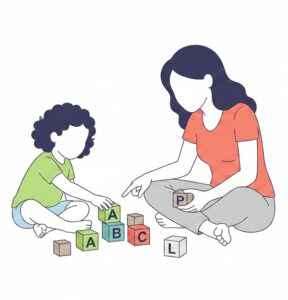
This screening helps determine where your child is meeting milestones across speech, communication, motor skills, and social engagement - giving you clarity on whether further clinical evaluation is recommended.
What the process looks like
In a playful, natural environment, a clinician observes your child while they engage in gentle, age-appropriate activities and talk through your daily home observations.
No cost to your family
Our initial Developmental Screening is free. We offer this at no cost because every parent deserves peace of mind and immediate answers without financial strain.
Comprehensive Autism Diagnostic Assessment: A Clear Roadmap
If screening or early indicators suggest autism, a formal Autism Diagnostic Assessment provides a clear, reliable evaluation and official diagnosis.
What it is for
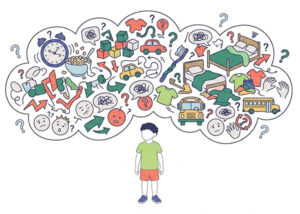
An official assessment moves your family away from guesswork. It identifies your child’s unique neurological profile, strengths, and support needs, and can provide access to provincial funding programs and individualized school accommodations.
What the process looks like at Monarch House
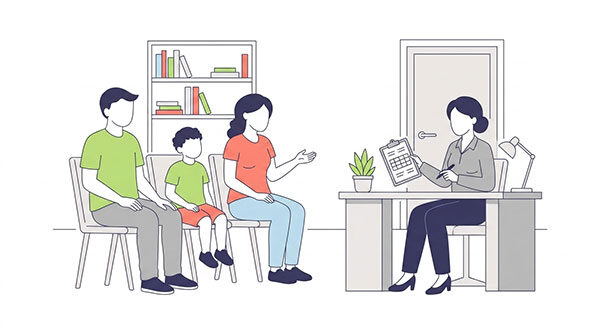
We reject the transactional "assess-and-dismiss" model. An interdisciplinary clinical team (including Registered Psychologists, Speech-Language Pathologists, and Occupational Therapists) conducts our science-based assessment. We combine direct clinical observation with detailed parent interviews to build a complete, compassionate picture of your child.
The outcome
You receive a comprehensive diagnostic report paired with an actionable, step-by-step roadmap tailored specifically to your family's daily life.
The Importance of Early Action & Immediate Support
Neurological research confirms that autism can be reliably diagnosed by age 2, with clear markers visible as early as 12 months. This window is critical because early neuroplasticity - the brain's ability to adapt and build new connections - is at its peak during early childhood. Why Waiting Compounds Challenges Taking a "watch and wait" approach can delay access to vital support during the exact years when your child’s brain is most adaptable. Without identification and accommodations, communication barriers and sensory overload often lead to intense frustration, missed milestones, and preventable burnout for both child and parent.Action Now Pays Dividends in Their Future
Early Intervention
- Guides brain development, leading to stronger language, social skills, and IQ.
- Builds regulation skills to offset later-stage anxiety, depression, and burnout.
- Introduces augmented & alternative communication, reducing meltdowns, hitting, and withdrawal.
- Empowers parents - reducing stress and improving family life.
- Starts the ‘clock’ for funding and specialized school placements.
Navigating the Ontario Wait Times
In Ontario, the waitlist for public diagnostic assessments and provincial funding through the Ontario Autism Program (OAP) can often take 4+ years. Getting an official evaluation as early as possible ensures your child is registered on the provincial funding waitlist without unnecessary delay.Free Support While You Wait
Your child’s development cannot afford to pause while waiting for funding or appointments. That is why we built Monarch Essentials - Canada’s largest library of free, expert-led articles, visual schedules, video guides, and checklists. Remember, every action you take today pays dividends in your child’s and entire family’s future. We want you to feel informed, empowered and in control while you wait for the funding system to run its course.
How to Register for the Ontario Autism Program (OAP)
Applying for provincial support can feel bureaucratically complex, but registering early is essential to accessing childhood budgets and core clinical services. We may sound like a broken record, but the earlier you receive your Comprehensive Autism Diagnostic Assessment, the sooner you can get yourself registered for funding. Here is the step-by-step process to apply for the Ontario Autism Program:- Obtain a Formal Written Diagnosis Ensure you have a formal diagnostic assessment report completed by a qualified Ontario practitioner (such as a Registered Psychologist or Developmental Pediatrician).
- Create a My Ontario Account Visit the official Ontario Government portal (ontario.ca/autism) and register for or log into your My Ontario account.
- Submit Your OAP Registration Form Complete the online registration form. You will need to upload your child’s written diagnosis document, proof of your child’s age (such as a birth certificate or passport), and proof of Ontario residency.
- Receive Your OAP Registration Number Once submitted, Access OAP (the provincial care coordinator) will issue a unique OAP registration number. Keep this number on file - it confirms your child’s place on the provincial waitlist and serves as your key identifier for future funding allocations.
- Connect with Monarch House for Guidance

Understanding Autism: Answers for Families Seeking Guidance
Navigating the early signs of developmental differences can feel daunting, and it is entirely natural to have countless questions before seeking a formal screening. Below, the clinical team at Monarch House has compiled evidence-based answers to the thirty most common questions parents ask when considering whether their child might be on the autism spectrum.Spotting the Early Signs & Understanding the Spectrum
What are the earliest indicators that my child might be on the spectrum? Early indicators often center around social communication and sensory engagement. You might notice your child making limited eye contact, not responding consistently to their name by 12 to 18 months, or showing less interest in sharing enjoyment (such as pointing out a toy). Other early signs include:- Delays in speech
- Repetitive movements (like hand-flapping)
- Becoming hyper-focused on a specific item
- helping soothe heightened anxiety
- processing sensory input
- communicating intense emotions
- or regaining focus when overwhelmed
Dispelling Autism Myths
Does a diagnosis mean my child will not be able to live an independent life? An autism diagnosis simply provides a map to understand how your child’s brain processes the world. Autistic individuals possess diverse strengths and capacities; with early, tailored support, children build communication, social, and daily living skills that foster confidence and autonomy. A diagnosis opens doors to support - it never sets a ceiling on what your child can achieve. What is the difference between a meltdown and a tantrum? A tantrum is typically goal-directed behaviour aimed at achieving a specific outcome (such as wanting a toy or treat), and it generally subsides once the child gets what they want or realizes it is unobtainable. A meltdown is an involuntary neurological response to severe sensory or emotional overload. During a meltdown, a child loses control over their emotional regulation and requires a safe, calm environment to recover. Won’t my child simply "outgrow" autism? Autism is a lifelong neurodevelopmental profile, not an illness from which a person recovers. However, children learn, adapt, and build crucial skills over time. With evidence-based support tailored to their unique profile, autistic children acquire functional communication, self-regulation tools, and social strategies that allow them to thrive as they grow. My child is extremely bright and knows all the letters and numbers - could they still be autistic? Yes. High cognitive capacity or early academic skills (such as hyperlexia - reading words at a remarkably young age) often coexist with autism. Autistic children may excel in pattern recognition, memory, or specialized interests whilst simultaneously requiring support with emotional regulation, social communication, or sensory processing. Is it better to "wait and see" if my child catches up naturally? No. Do not wait. The "wait and see" approach can result in lost opportunities during periods of high brain plasticity. Early identification allows families to:- implement supportive strategies immediately
- ease daily friction
- prevent frustration
- support crucial developmental milestones earlier
- Improve long-term outcomes & more successful futures